The Real Reason Why Most Creative Agencies Stay Stuck between $10-30k/m
A former agency founder who scaled to $3M, nearly lost everything, and discovered the one shift that changes how the right clients see you - permanently.
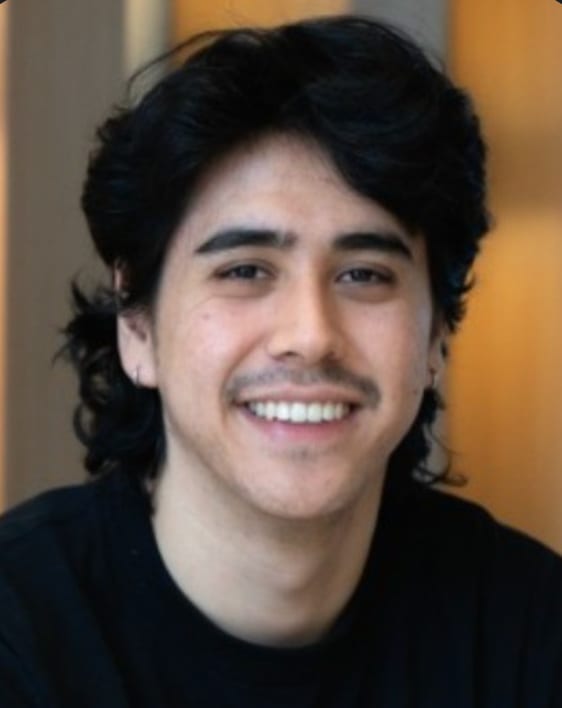
"I had tried for four months and closed basically nothing. After getting my offer clear and going live with it, I did around $70K AUD in the next six weeks. Same skills. The thing that changed was that I finally had something I believed in and could say out loud without hedging."
— Hugo, Content Creator turned Agency Owner
★★★★★
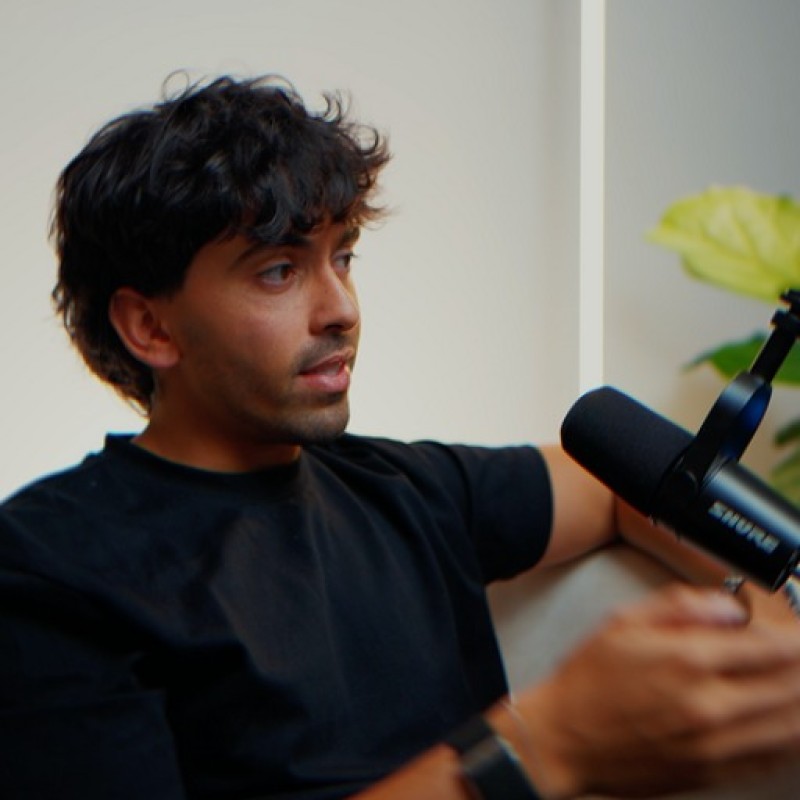
"I went from $20K a month to $90K. I stopped being a general content shop and became the studio for supplement brands. I have a team now, real systems, and for the first time I know where next month is coming from."
— Charles, UGC Studio Founder
★★★★★
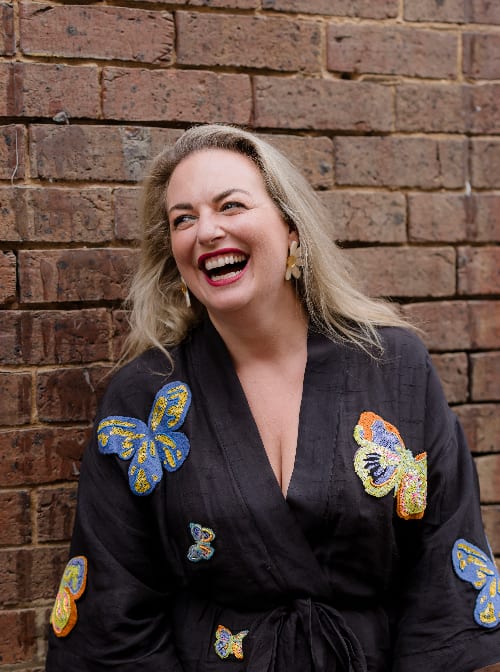
"I was on the verge of going back to a 9-to-5. Four weeks later I had multiple retainer-style deals. The only thing that actually changed was the signal."
— Amber, Creative Founder
You are genuinely good at this.
Your work is strong. You have the clients to prove it, or you have had them. You know, with absolute certainty, that you could outperform half the studios and freelancers who are somehow charging twice what you charge and landing the clients you want.
And yet here you are. Refreshing your inbox. Doing the mental maths on whether this month covers everything. Taking a job you do not want because the alternative is a quiet week you cannot afford.
Most months feel like starting from zero.
You post, you pitch, you follow up. You drop the price a little when someone hesitates, tell yourself it is just this one client, and then watch the next month arrive exactly the same way. The feast-famine cycle has a rhythm by now. You know it well enough to dread it.
Here is the internal monologue from almost every first call: 'I just need more leads. If I could get in front of the right people, they'd see it. Maybe I need a better portfolio. Maybe the niche is wrong. Maybe I should post more. Maybe I should run ads.'
If that sounds familiar, you are not alone. And you are not broken.
But nobody is telling you this: that is not a leads problem. It is not a niche problem. It is not a visibility problem.
The real problem is that your offer sends a weak signal. A weak signal means the right client cannot tell why you, specifically, over the next person with a comparable service. So they go somewhere else, or they haggle on price, or they disappear after the discovery call. Not because your work is not good enough. Because nothing in your message gave them a clear reason to stop and choose you.
More traffic into a vague offer just means more people ignoring you, faster.
You are not losing to less talented people because the market is unfair. You are losing because the most talented person in the room is not automatically the most obvious choice.
Why you are still stuck.
Most creatives believe the work should speak for itself. And honestly, that belief is not crazy. You have spent years building real skill. You have the case studies. You know what good looks like, and you deliver it. It seems obvious that the output is the argument.
Buyers are not shopping for craft. They are hunting for a clear reason to trust one specific person with one specific problem. When they land on your portfolio, they see proof you can do the work. What they do not see is why you, over the ten others who can also do the work. The portfolio proves capability. It never explains the choice.
So the buyer does the only thing left. They compare on price.
The most obvious choice is the one whose offer tells the right buyer, before any conversation happens, that it was built for them. That is the whole game. Not better work. A clearer signal.
Why traditional approaches keep you trapped.
Every coach, course, and thread you have read hands you the same answer for a slow month. More leads. More outreach. Better content. Run some ads. Turn up the volume and something eventually breaks through.
The advice is not malicious. It is just aimed at the wrong problem.
Distribution fixes do not fix positioning. Posting more amplifies whatever signal your offer already sends. If the offer is vague, more eyes on it just means a bigger room full of people who cannot tell whether it is for them. Ads are the expensive version of the same trap. They pour fuel on whatever is underneath, so a murky offer with ad spend behind it pulls in the wrong clients faster, at the wrong price, with more of them. You pay money to accelerate the thing that is draining you.
The channel was never the variable. A weak signal burns through every channel the same way.
I learned this in the most expensive way possible.
I was just like you.
I was and always will be a Creative before a business owner. I played at festivals, opened for Sticky Fingers, shared a stage with Tones and I before Dance Monkey took over the world. One song pulled a couple of million Spotify streams. By every external measure, I was one of Creatives in Melbourne at my age "making it".
But the music industry does not compound. You do the work, you stack the wins, and you still have no idea whether rent is covered in three months. My future sat in the hands of playlists, promoters and luck, and no amount of effort changed that equation. So I pivoted. If I loved creativity that much, I would find a vehicle with systems I could actually control, a way to setup the real future I wanted.
That became a creative agency. I ran the front of the business: sales, growth, client acquisition. My co-founders held up everything else. And for a few years we moved fast. We scaled to thirty-five staff, crossed three million in revenue, pioneered UGC and TikTok advertising for some of the biggest brands in Australia.
Then the walls caved in.
A cluster of retainers dropped inside a short window. The wages bill sat at over $150K a month. We had a three-storey lease we could not carry. We bled money for over six months and got close enough to bankruptcy to consider what we would do next. The hardest day was sitting people down, one at a time, and telling twenty of them we could no longer support them. People who had become friends. Their mortgages. Their families. I was 21 years old and I could not even be in the room for half of those conversations.
The confession underneath all of it: the agency was built on an offer I had never fully bought into. I was pitching something I did not fundamentally believe in, to clients who did not need it on a monthly basis. No wonder people would not sign long-term retainers. We competed on capability and price, and eventually someone copied one and undercut the other. There was no deeper reason for a client to continue investing month after month, because there was no conviction underneath the thing we were selling.
When the leads stopped and the clients left, there was almost nothing to stand on.
What saved us was not more outreach. It was not a better funnel. It was a single realisation that hit slowly and then all at once.
Meaning, difference, and direction in the offer were not nice extras to sort out later. They were the only load-bearing wall.
We rebuilt around something I actually believed in. We pivoted from generic UGC into TikTok brand strategy for enterprise, going from five-figure retainers to thirty-thousand-a-month contracts with brands like Weet-Bix, The Body Shop, Pandora, and Scrub Daddy. The business hit $500K a month, and this time it held, because the signal underneath it was real.
That is the thing I am still teaching now.
Clarity is not found. It is uncovered.
Think about tuning an old radio. You turn the dial through static, bits of one station bleeding into another, nothing you would stop on. Then you hit the exact frequency and the noise falls away and a single voice comes through clean. Nothing about the broadcast changed. You just landed on the frequency it was already transmitting on.
That is what happens when a creative founder stops leading with what they make and starts leading with what they stand for. The offer stops scattering across every possible buyer and locks onto one frequency. The right person hears it clearly. They stop.
Koko had been a videographer for ten years, shooting music videos, fashion films, work for Nike and Puma. He was making about £2,000 a month. His offer was a portfolio and a day rate. He would send the deck and wait. Most months, barely anyone bit.
The skill was never the problem. The signal was.
We built one specific offer around one specific problem for one specific buyer. He had spotted that most e-commerce ads failed because they looked like ads. His system reversed that: find what a brand's customers are already consuming, engineer content in that language, iterate off what the reports show. He called it stealth ads. We named it, priced it on the outcome it drove, and pointed it at e-commerce brands sick of ads that looked like ads.
Same camera. Same eye. Same person. He went from £2,000 to $120,000 a month. He now has an office in London and a senior team that manages the delivery. He has not touched a camera himself in over a year.
The talent never moved. What moved was that the talent finally had a name, a buyer, and a reason to be the obvious choice.
That is the signal. And once it locks, everything else moves with it.
The exact sequence used with creative founders across every stage, from freelancers billing $2,000 a month to agency owners heading for seven figures. Built around a single idea: the offer is the constraint. Fix the offer first and every hour you spend on growth starts compounding.
01
Build the Offer
Narrow to one person, one burning problem, one outcome that is clearly yours to own. Build a productised system around it, a named, repeatable mechanism that moves a specific client from A to B. This is where the signal comes from, and nothing downstream holds without it.
02
Generate Conversations
Get the new offer in front of real humans fast. Personalised outbound, warm reactivation of people you already know, Loom outreach, then cold. No ad spend, no mass DMs. The offer sharpens in contact with real people, nowhere else.
03
Communicate and Close
Run discovery and a two-step workshop close so the offer does the persuading before price ever comes up. When a client has already watched you map the outcome onto their exact situation, most objections dissolve before they arrive. Selling becomes confirming, not convincing.
04
Scale with a System
Only once you know the offer converts do you layer on ads, a VSL, a landing page, and a CRM. Then growth compounds, because qualified prospects are booking calls while you are asleep. This step is last on purpose.
What Others Are Saying
"I had tried for four months and closed basically nothing. After getting my offer clear and going live with it, I did around $70K AUD in the next six weeks. Same skills. The thing that changed was that I finally had something I believed in and could say out loud without hedging."
— Hugo, FOR YOUR LAB
"I went from $20K a month to $90K. I stopped being a general content shop and became the studio for supplement brands. I have a team now, real systems, and for the first time I know where next month is coming from."
— Charles, BLACKBOARD AGENCY
"After repositioning my offer, I was able to completely change the way people bought from me "
— Gabe, ExposURE agency
"I completely changed the way I worked. As a mum of 4 kids I know do the work i love, have choice and I just bought my first home ."
— BELINDA, BRAND TALES AGENCY
"I was at $15K a month, fully reliant on referrals, dreading the quiet weeks. Now I have five to six qualified calls booked every week and revenue stacking month on month. I could not have told you what my offer was when we started."
— Amber, AMBER SOCIAL
"I signed Women's Weekly, after not being able to sign high ticket long term contracts"
— Victoria, Sender Studio
Same camera. Same eye. Same skills. The variable was the signal.
Koko had spent ten years behind a camera, shooting music videos, fashion films, and commercial work for brands like Nike and Puma. He was billing roughly £2,000 a month. His offer was a rate card and a portfolio. He sent the deck, quoted a day rate, and waited.
Most months, barely anyone responded.
When we got to work, we did not change his skills. We built one offer around a specific insight he had been dismissing: that e-commerce ads fail because they look like ads. His system, which he called stealth ads, reversed that by engineering content from what a brand's target customers were already watching. We named it, priced it on the outcome it drove, and aimed it at a specific kind of buyer.
He went from £2,000 a month to $120,000 a month. He has an office in London, a senior team managing all delivery, and has not worked as the operator on a shoot in over a year. The identity shifted before the numbers did. He had to decide he was no longer the freelancer and become the owner who holds a price, says no to misaligned work, and puts a clear point of view in public. Everything else followed from that.
Why the portfolio waiting room is killing your pipeline
Most clients have already scrolled past ten portfolios before they find yours. Discover why leading with your past work is the one habit that makes you invisible to the buyers most worth winning.
02
The one sentence that changes what clients are willing to pay
There is a specific structure behind an offer that makes a buyer self-select before you ever get on a call. The book walks you through building yours word by word, with the test that tells you whether it has landed.
03
Why slow months are almost never a leads problem
Hugh maps the Murky Signal Loop, the self-sealing cycle where the wrong clients drain you too completely to fix the thing causing them to show up. Understanding this pattern is what lets you break out of it.
04
What Koko saw in e-commerce ads that nobody else had named yet
His insight about why most ads fail was the entire offer once it was framed correctly. The book shows exactly how a skill you have been dismissing can become the sharpest thing in your positioning.
05
The identity shift that happens before the revenue does
Koko, Charles, Hugo, and Blake all changed how they described themselves before the numbers moved. The book explains why the operator-to-owner shift is not a mindset exercise but a sequence you can actually run.
06
How to price on the outcome instead of the deliverable
Charging a day rate is selling the one thing every competitor also has. The book breaks down how to price on the transformation you drive, and why that conversation lands at a completely different number.
07
The two-step workshop close that removes price as the obstacle
When a client has already watched you map the outcome onto their exact situation, price stops being the fight. The book walks through the discovery-and-workshop sequence that lets the offer do the convincing before you ever quote a number.
08
Why building the funnel before the offer is the most expensive mistake in this industry
Most advice in this space runs the sequence backwards. The book explains why adding distribution to a vague offer just accelerates the wrong result, and what to build first so every later investment actually compounds.
09
How to narrow to one person without cutting off your revenue
The chapter on niching addresses the fear directly and shows through Blake's story exactly what happens when a creative stops being available to everyone and becomes undeniable to someone.
10
The act-read-sharpen loop that builds conviction through reps
Clarity does not come from thinking harder about the offer. It comes from putting it in front of a real person and reading what comes back. The book gives you the exact sequence to run, starting this week.
Is this right for you?
This is NOT for those who —
Want a plug-and-play template they can run without doing the harder work of deciding what they actually stand for.
Are just starting out with no clients and no proof of concept yet. Get a few reps in the market first, then come back.
Are comfortable with inconsistency and have no real hunger to build something that compounds.
Want someone to tell them the problem is the market, the economy, or the algorithm.
This is for —
The creative founder who knows the work is good but cannot work out why the right clients are not finding it.
Videographers, photographers, designers, content creators, and founders running production houses, UGC studios, or performance creative agencies.
Anyone somewhere between feast and famine, probably too reliant on referrals, with a version of their business they can see clearly that looks nothing like the one they are currently running.
The person who is ready to look at the offer honestly, not just add more volume on top of it.
Frequently Asked Questions
Is this just another book about niching down and charging more?
No. The book addresses both of those things, but they are downstream of a prior question that almost nobody sits with long enough: what do you actually believe is broken in your market, and what do you stand for? That is where the offer comes from. Without it, niching is just picking a category, and pricing advice is just a number with nothing to hold it up.
Do I need to already have a big audience or a lot of clients?
No. The sequence in the book starts from wherever you are. Koko had a portfolio and a day rate. Hugo had been closing almost nothing for months. Blake was taking whatever local work came through the door. The method works from proof of concept, meaning some sense of what you do and who you have done it for. If you have that, you have enough to start.
How quickly can I see results if I apply this?
The honest answer is that it depends entirely on how fast you get the offer in front of real people. Hugo moved roughly $70K in six weeks once the signal was clear and he was doing consistent outreach. Others take longer because they refine instead of shipping. The book is direct about this: the market sharpens the offer faster than your own head does. The loop is act, read the signal, adjust, go again. The speed is mostly a function of how willing you are to move before it feels finished.
I have tried outreach before and got ghosted at scale. What is different here?
Outreach failed because the offer underneath did not give the right person a reason to stop. When the message is vague, even a well-personalised note reads like noise. The book treats outreach as the second step, not the first. You fix the offer, then you generate conversations. In that order, the hit rate changes completely because you are no longer asking strangers to figure out whether you are relevant to them.
What if I am already doing decent numbers but still feel stuck?
The book is written from exactly that position. Hugh scaled the agency to three million before he understood that the offer underneath had no real foundation. The pattern of strong months that do not compound into anything reliable is almost always a signal problem, not a volume problem. Charles was at $20,000 a month with real clients before the offer got specific enough to turn into $90,000 a month with a team and systems behind it.
Is this a book that leads into a coaching programme?
The book stands entirely on its own. Every framework, concept, and exercise it contains can be applied without any further purchase. If you finish it and want an outside read on where your specific signal is breaking, there is a free Clarity Call available at the end. That call exists to find the single thing holding your growth back, and it is genuinely free, with no pressure attached.
Hugh O'Donnell.
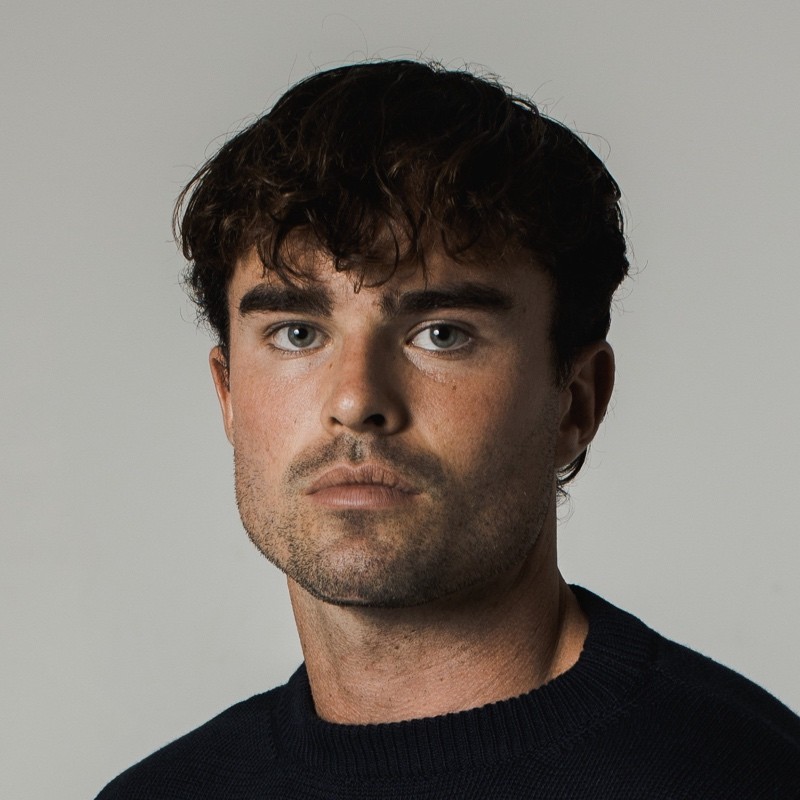
Hugh O'Donnell started as a musician. He played Triple J festivals, opened for Sticky Fingers, shared stages with artists like Tones and I before Dance Monkey changed everything for her. One of his songs pulled over two million Spotify streams. He was 19, and by every external measure, he was one of the ones making it.
But the music industry does not compound. So he pivoted, and eventually, with two co-founders, built a creative agency that scaled to thirty-five staff, crossed three million in revenue, and pioneered UGC and TikTok advertising for some of the biggest brands in Australia, including Weet-Bix, The Body Shop, Pandora, Kathmandu, Scrub Daddy, and Extra Gum.
Then twenty people lost their jobs in a single day, because the business had chased growth with no real foundation underneath it.
That day shaped everything Hugh now teaches. The agency was rebuilt on an offer he actually believed in, repositioned for enterprise TikTok strategy, and scaled again, this time profitably, to $500K a month. After years of working with the biggest brands in the country, he moved to Bali, found some distance from it, and realised he had spent years helping large brands make more money from a position that had stopped meaning anything to him.
People started reaching out. Freelancers. Agency owners. Creatives who had seen the pivots and wanted to understand how. He started taking calls, and inside those first conversations he saw the same pattern he had just lived through: talented people, genuinely good at the craft, stuck in the same feast-famine cycle for the same underlying reason. Not a leads problem. A signal problem.
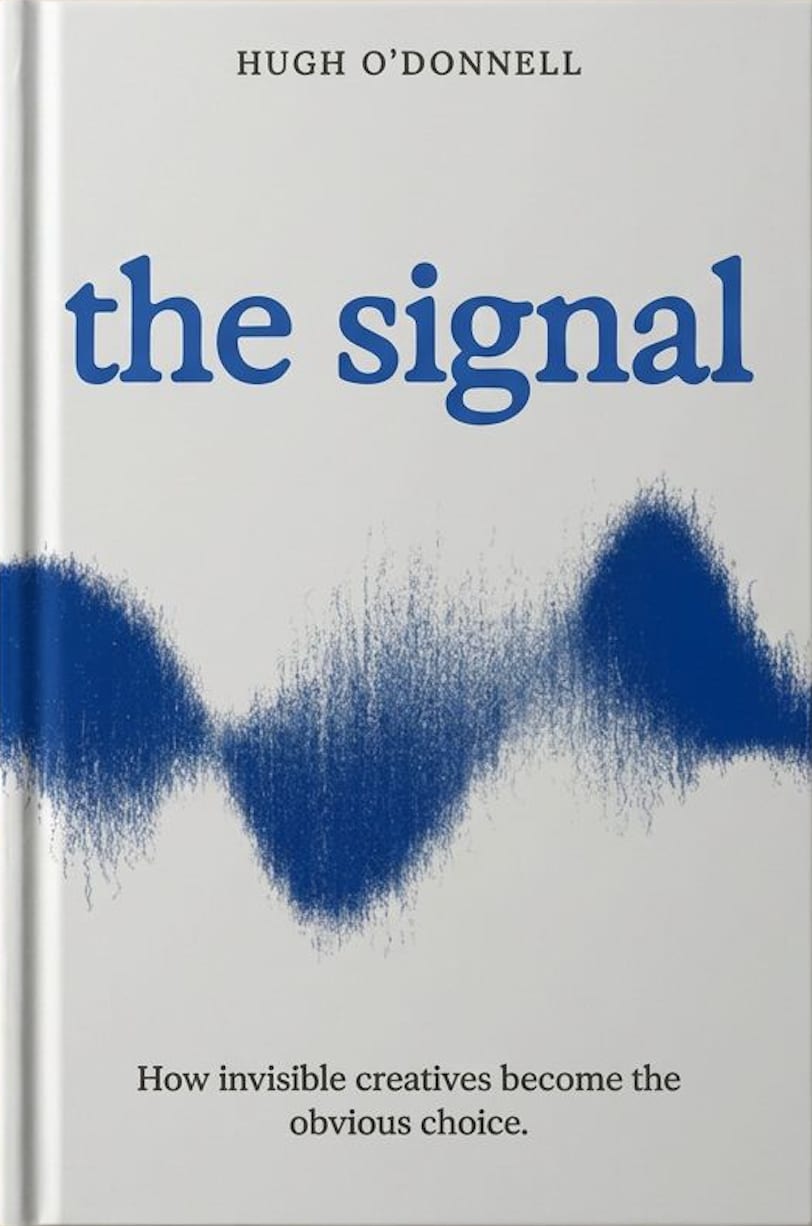
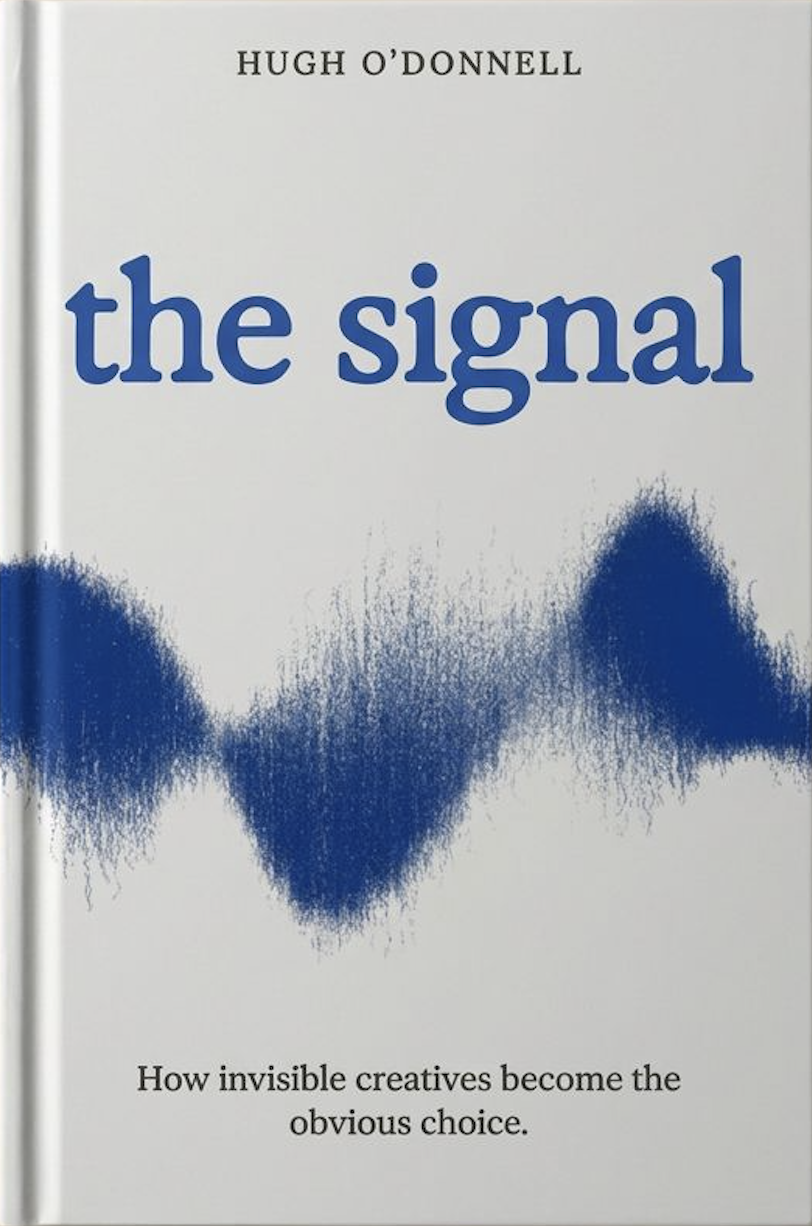
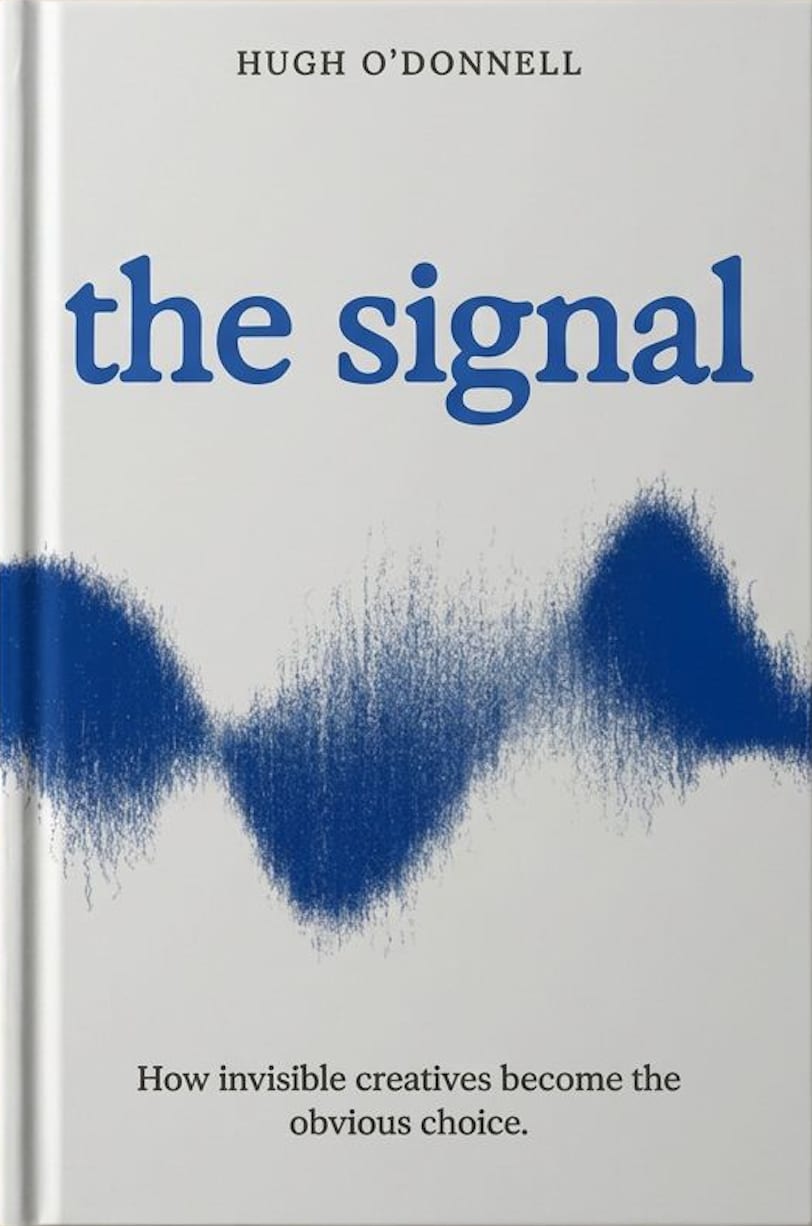
He sold the agency to one of his earliest clients and stepped fully into working with creative founders directly. The Signal is the book he wishes had existed when the walls caved in.
Who You Become
One clear signal.
The obvious choice. No more starting from zero.
The anxiety does not vanish because life gets easier. It fades because you finally know why someone would choose you, and you can say it in a sentence.